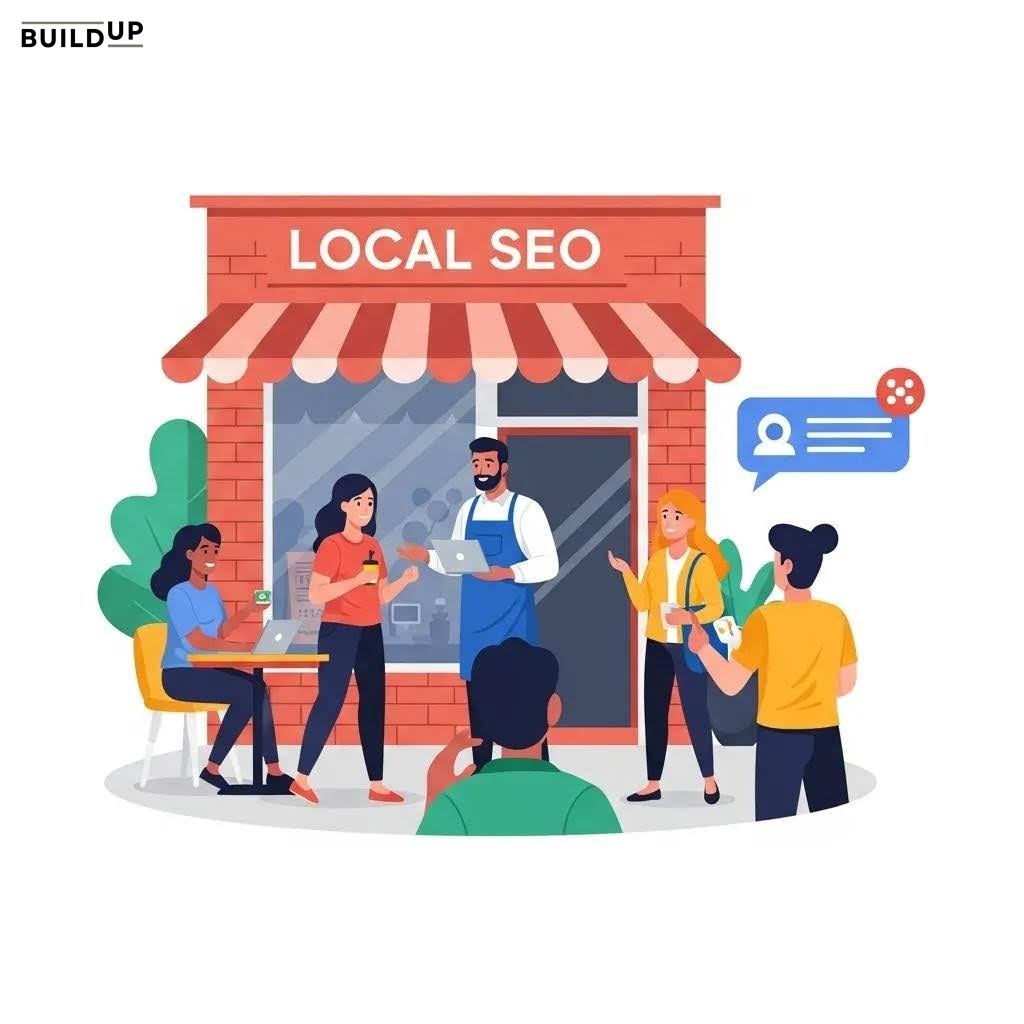
What Is Local SEO? A Practical Guide to Local Rankings in 2026
Local SEO (local search engine optimization) is the process of optimizing your business's online presence to appear in location-based search results on Google, Maps, and AI-powered tools. It involves managing your Google Business Profile, building local citations, generating reviews, and creating location-specific content to attract nearby customers actively searching for your services.
Key Takeaways
Local SEO targets geographic relevance, connecting your business to nearby customers at the moment they're searching
Your Google Business Profile is the single most important local SEO asset; keep it fully optimized and actively managed
NAP consistency (Name, Address, Phone) across every directory and citation source is non-negotiable
Reviews directly influence both local rankings and conversion quantity, and your responses all matter
In 2026, AI-powered search tools and voice search make local optimization essential beyond just Google
Local SEO typically delivers measurable results, such as more calls, leads, and booked jobs within three to six months
If you run a business that serves customers in a specific city, county, or region, local SEO is one of the highest-ROI investments you can make in digital marketing. But what is local SEO, exactly, and how do you do it in a way that actually moves the needle in 2026?
This guide breaks it all down: the definition, the ranking factors, the strategies, and the common mistakes, written specifically for contractors, home service providers, and small businesses ready to dominate local search.
What Is Local SEO?
Local SEO (local search engine optimization) is the process of optimizing your online presence so your business appears in search results when nearby customers are looking for what you offer. Unlike traditional SEO, which targets broad, national audiences, local SEO focuses on geographic relevance, connecting your business to people in your city or service area at the exact moment they need you.
When someone types "roof repair near me" or "plumber in Salt Lake City" into Google, local SEO is what determines whether your business shows up or your competitor's does.
The most coveted result in local search is the Google Local Pack (sometimes called the Map Pack), the three highlighted business listings that appear above organic results. Earning a spot there can dramatically increase calls, website visits, and booked jobs, without paying for ads.
Why Local SEO Is Important for Businesses in 2026
Understanding why local SEO is important starts with a simple reality: most service-based purchases begin with a local search. Customers searching for contractors, HVAC technicians, electricians, or landscapers aren't browsing casually; they have a problem, and they need someone nearby to solve it. That intent makes local search traffic uniquely valuable.
Here's why local SEO matters more than ever in 2026:
High-intent traffic converts. Searchers looking for local services are often ready to call or book. Appearing in front of them at that moment beats almost any other marketing channel on conversion rate.
Voice search has changed the game. With the continued growth of smart speakers and voice assistants, queries like "Hey Google, find a contractor near me" are increasingly common. Local optimization is central to capturing voice search results, which tend to pull directly from the Local Pack.
AI-powered search surfaces local businesses. Google's AI Overviews and platforms like ChatGPT and Perplexity now recommend local businesses. An optimized local presence, with accurate data, strong reviews, and consistent citations, is how you get recommended by LLMs and AI search tools, not just traditional search engines.
Mobile-first users expect instant local results. The majority of local searches now happen on smartphones. Google's mobile-first indexing means your mobile experience directly influences your local rankings.
For contractors and home service businesses in competitive markets like Utah, this isn't optional; it's survival.
How Local SEO Works: The Core Ranking Factors
Google's local ranking algorithm evaluates three primary dimensions:
Relevance
Does your business match what the searcher is looking for? This comes down to how well your Google Business Profile, website content, and citations describe your services.
Distance
How close is your business (or service area) to the person searching? While you can't always control proximity, you can signal your service areas clearly.
Prominence
How well-known and trusted is your business online? This is shaped by reviews, backlinks, citation volume, and overall authority.
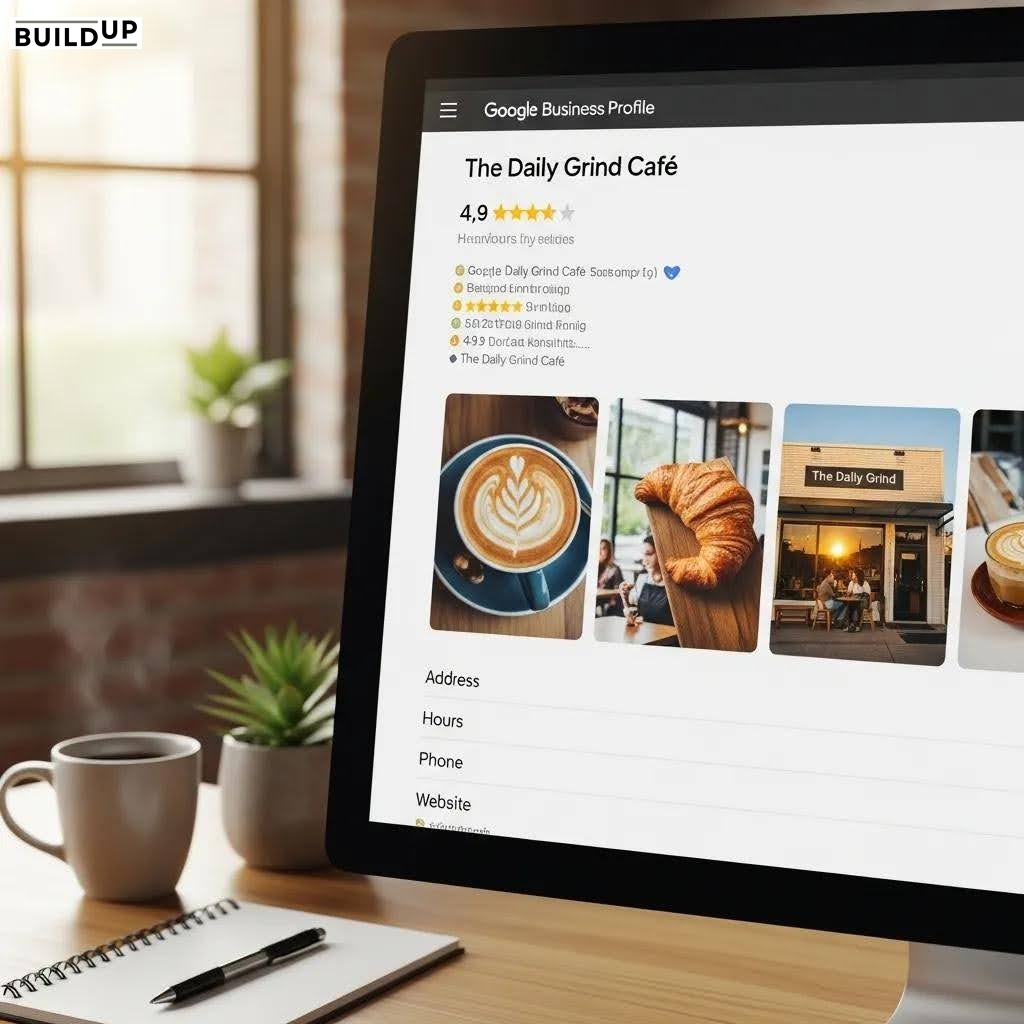
Within those three pillars, the specific factors that most directly influence local visibility include:
Google Business Profile (GBP) optimization — Your GBP is the single most important local SEO asset. Google research confirms that active, fully completed profiles with updated information, photos, and regular posts significantly outperform neglected listings in both Maps and local search visibility.
Online reviews and reputation — Review quantity, recency, rating, and your responsiveness all influence your local rankings. A steady stream of genuine 5-star reviews signals trustworthiness to both Google and potential customers.
NAP consistency — Your business Name, Address, and Phone number must be identical across every online directory, citation source, and social profile. Inconsistencies confuse search engines and erode trust.
Local citations — Listings on platforms like Yelp, Angi, HomeAdvisor, BBB, and industry-specific directories tell Google that your business is legitimate and well-established in your area.
On-page local SEO signals — Service area pages, location-specific content, structured data markup (schema), and locally relevant keywords on your website reinforce geographic relevance.
Backlinks from local sources — Links from local news sites, chambers of commerce, trade associations, and community organizations carry significant local authority weight.
Behavioral signals — Click-through rates, direction requests, calls from your GBP listing, and time spent on your site all signal real-world engagement to Google's algorithm.
How to Do Local SEO: Strategies That Work in 2026
Learning how to do local SEO effectively means building a system, not just checking a few boxes. Here are the core strategies for sustainable local rankings.
1. Fully Optimize Your Google Business Profile
Your GBP is your most powerful local SEO tool, and most businesses leave it half-finished. A truly optimized profile includes:
Accurate and consistent business name, address, phone number, and website URL
The correct primary category and all relevant secondary categories
A keyword-rich business description (without keyword stuffing)
All services listed with individual descriptions
Business hours updated for holidays and seasonal changes
High-quality photos of your team, work, vehicles, and completed projects
Regular GBP posts weekly, if possible, covering promotions, recent jobs, and helpful tips
Q&A populated with common questions and thorough answers
For micro, small, and medium enterprises (MSMEs), consistent management of a GBP listing has been shown to directly improve product and service visibility, competitive positioning, and overall business sustainability in local markets.
2. Build a Consistent Local Citation Profile
Citation building means ensuring your business is listed accurately across the web. Start with the foundational directories Google, Yelp, Bing Places, Apple Maps, Facebook, and the BBB, then expand to industry-specific platforms (Angi, Houzz, Thumbtack for contractors) and local directories in your city or state.
The golden rule: NAP must be 100% identical everywhere. Even small variations, "St." vs. "Street," or a missing suite number can dilute your local authority.
Beyond directories, pursue citations from:
Local chambers of commerce memberships
Community sponsorships and event partnerships
Trade association listings
Local news coverage and press mentions
3. Generate and Manage Online Reviews Strategically
Reviews are among the most powerful local ranking signals, and arguably the most persuasive conversion factor for potential customers. A smart review strategy includes:
Asking every satisfied customer for a Google review (in person, via text, or email follow-up)
Making it easy with a direct review link
Responding to every review, thank the positive ones specifically, and address negative reviews professionally and promptly
Diversifying reviews across Google, Yelp, and industry platforms
Never purchase or incentivize fake reviews. Google's detection has improved significantly, and the penalties, including listing suspension, are severe.
4. Create Location-Specific Website Content
Your website needs to speak to where you work, not just what you do. Effective local content includes:
Individual service area pages for each city or county you serve
Landing pages optimized for high-intent local keywords (e.g., "kitchen remodeling contractor in Provo, UT")
A locally relevant blog covering topics your ideal customer actually searches for
Embedded Google Maps on your contact and location pages
LocalBusiness schema markup to help search engines and LLMs understand your business details
5. Build Local Backlinks
Links from authoritative local websites send powerful geographic relevance signals. Target:
Local newspaper and TV station features
Sponsorships of local events, schools, or sports teams
Guest posts on local business or real estate blogs
Partnerships with complementary (non-competing) local businesses
6. Optimize for Mobile and Voice Search
In 2026, your local SEO strategy must account for how searches are actually being conducted. Voice search queries are conversational and question-based ("Who are the best roofers near me?"), So your content should include natural-language FAQ sections and direct answers.
Mobile optimization means fast load times (under 3 seconds), click-to-call buttons, easy navigation, and no intrusive pop-ups. Core Web Vitals, Google's set of user experience metrics, directly influence both local and organic rankings.
Local SEO Services: What to Look for in a Provider

Many businesses eventually look for local SEO services to manage this work professionally. When evaluating an agency or consultant, look for:
A proven track record with similar businesses (ideally in your industry or region)
Transparent reporting on GBP performance, ranking positions, and lead volume
A clear strategy, not just a list of deliverables
No guarantees of "#1 rankings" (a red flag in any reputable SEO engagement)
Experience with local link building, not just on-page optimization
Effective local SEO services typically include GBP management, citation auditing and cleanup, review generation systems, local content creation, and ongoing tracking of ranking and conversion metrics.
Common Local SEO Mistakes to Avoid
Even well-intentioned local SEO efforts can stall or backfire due to avoidable errors:
Inconsistent NAP data. A mismatched phone number or address across listings confuses Google's ability to verify your business and can suppress your local rankings.
Ignoring reviews. Businesses that don't respond to reviews, especially negative ones, signal poor customer experience. Google factors responsiveness into prominence scores.
Thin or duplicate location pages. Creating dozens of nearly identical city pages doesn't fool Google. Each location or service area page needs genuinely unique, locally relevant content.
Neglecting GBP after setup. A stale profile with outdated photos, no posts, and unresponsive reviews will lose ground to competitors who actively manage theirs.
Skipping schema markup. Structured data helps both search engines and AI models accurately understand your business; skipping it is a missed opportunity for both traditional and LLM-driven search visibility.
Local SEO Challenges for Utah Contractors
Utah's contractor market is growing rapidly, and so is the competition in local search. Contractors in Salt Lake City, Provo, Ogden, St. George, and the surrounding areas face a few specific challenges:
Market density. More contractors have started investing in digital marketing, meaning the barrier to Local Pack entry is higher than it was just a few years ago.
Algorithm volatility. Google updates its local ranking algorithm regularly. Businesses that built visibility on a single tactic like citation volume alone often see rankings fluctuate. Sustainable rankings require a multi-signal approach.
Seasonal demand patterns. Utah contractors experience seasonal swings in search volume. Local SEO strategies should account for this by building authority year-round, not just ramping up marketing in peak season.
Limited time and internal resources. Most contractors are running crews, managing projects, and handling operations, not monitoring Google algorithm updates. That's where professional local SEO services become a genuine competitive advantage.
Despite these challenges, the opportunity is real. Contractors who invest consistently in local SEO often see measurable increases in qualified inbound leads within three to six months, particularly when Google Business Profile optimization and review generation are prioritized.
The BuildUp Agency's Approach to Local SEO for Utah Contractors
At The BuildUp Agency, we specialize in local SEO for contractors and home service businesses across Utah. Our approach is built around the factors that actually drive Local Pack rankings and qualified leads, not vanity metrics.
We handle the full spectrum of local search engine optimization: GBP setup and ongoing management, citation auditing and cleanup, review systems, local content creation, schema markup, and transparent monthly reporting. Our clients don't just rank, they get calls and booked jobs.
If you're a Utah contractor ready to take local search seriously, contact The BuildUp Agency to learn how we can help you rank where your customers are looking.
Frequently Asked Questions About Local SEO
1. What is local SEO in simple terms?
Local SEO is the process of optimizing your online presence so your business appears when nearby customers search for the services you offer, on Google, Maps, and increasingly on AI-powered search tools.
2. How long does local SEO take to show results?
Most businesses see measurable improvement in local rankings and lead volume within three to six months, with GBP optimization and review generation typically producing the fastest gains.
3. What's the difference between local SEO and regular SEO?
Regular (organic) SEO targets broad, often national audiences. Local SEO focuses specifically on geographic relevance, helping you rank in local searches and the Google Map Pack for searches in your service area.
4. Is local SEO worth it for small contractors?
Yes. Local SEO targets high-intent customers actively looking for your services nearby, which typically delivers a significantly better return than paid ads or broad marketing channels for service-based businesses.
5. How much do local SEO services cost?
Local SEO services vary widely, but small-to-medium contractors typically invest between $500 and $2,500 per month for professional management. The right investment depends on your market's competitiveness and your growth goals.